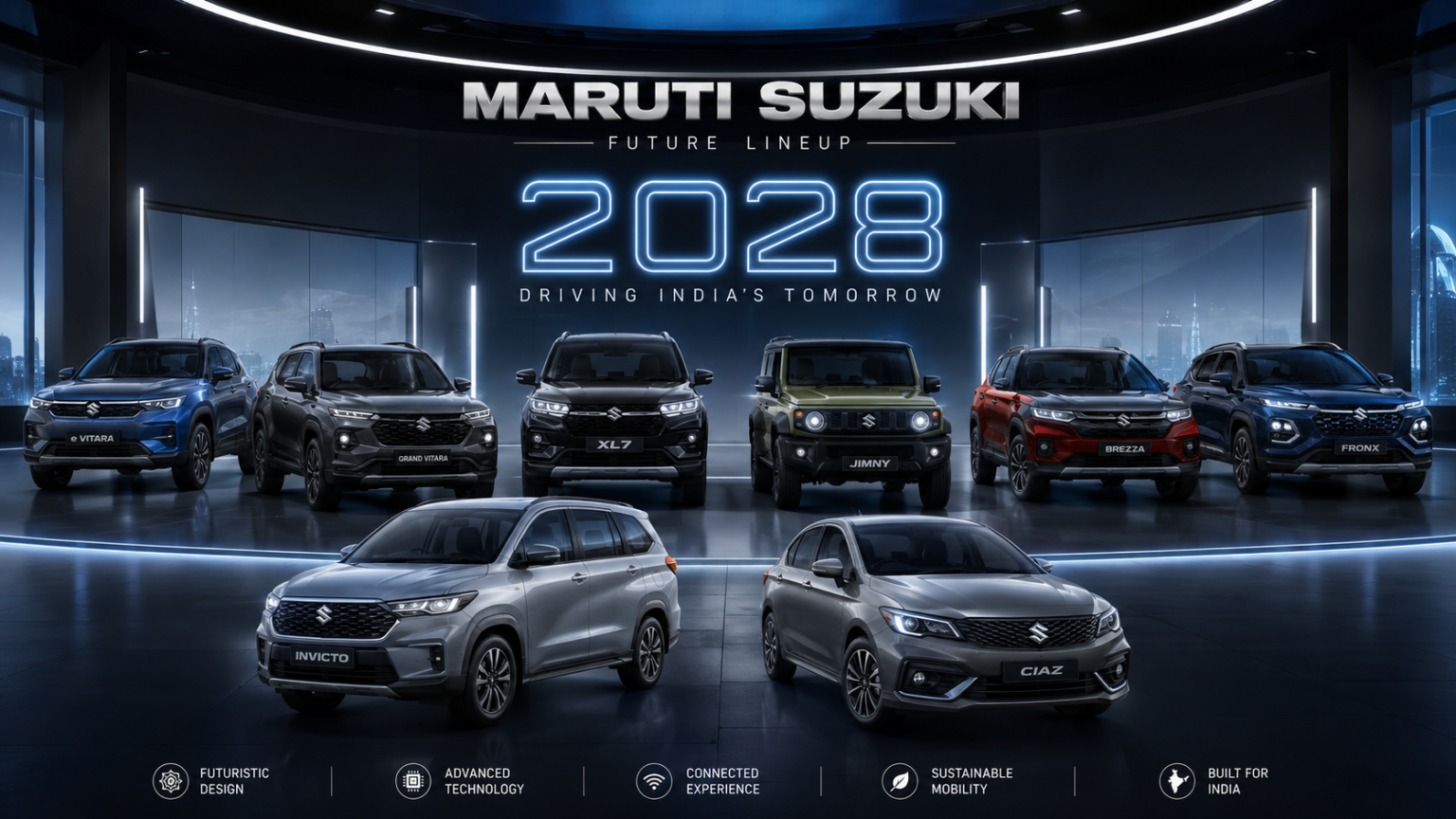

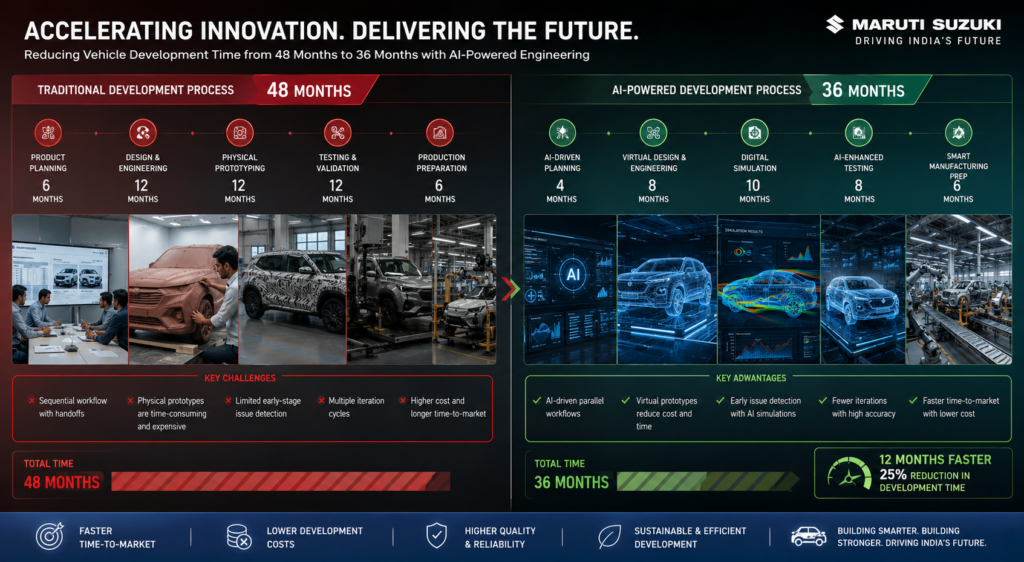
Maruti Suzuki is cutting its car development timeline from 48 months to 36 months. That is a 25 percent reduction. The company plans to launch nine new models in the next three years, and seven of them will be SUVs. To make this happen, Maruti Suzuki is using AI, machine learning, simulation based testing, and a completely new way of working with its suppliers.
Here is everything we know about the new Maruti Suzuki cars coming in 2026, 2027, and 2028, and what this faster development approach means for Indian car buyers.
Why Is Maruti Suzuki Speeding Up Product Development?
The Indian car market is not what it was five years ago. India is now the third largest car market in the world, and it is growing fast. Brands like Tata Motors, Hyundai, Kia, Mahindra, and MG Motor are launching new SUVs and electric vehicles every few months. Product refresh cycles across the industry are getting shorter. Even Nissan has announced aggressive launch plans for India in 2026, which shows how intense the competition has become.
Maruti Suzuki holds close to 40 percent market share in India. But that number means nothing if the company cannot keep up with how fast the market is changing. If it takes Maruti four years to develop a car, the trend it was chasing may have already passed by the time the car hits showrooms.
Cutting development time from 48 months to 36 months gives Maruti Suzuki the ability to respond to market shifts a full year faster. In a market where the Tata Sierra and Hyundai Creta are already fighting for SUV buyers, that extra year makes a big difference.
What New Maruti Suzuki Cars Are Coming by 2028?
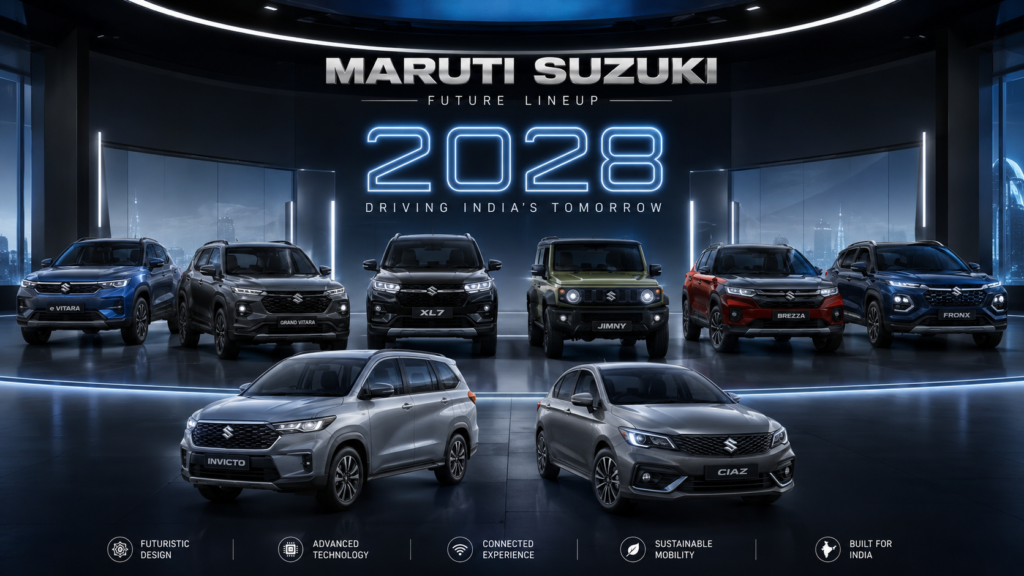
Maruti Suzuki has lined up nine new models for launch over the next three years. Seven of these will be utility vehicles (SUVs and crossovers). Here is a quick summary:
| Detail | Information |
|---|---|
| Total new models planned | 9 |
| SUVs out of 9 | 7 |
| Launch window | 2026 to 2028 |
| Current development time | 48 months |
| New target development time | 36 months |
| Localisation target | More than 80% |
| FY2027 production target | 28.2 lakh units (2.82 million) |
The lineup will include multiple powertrain options across models:
- Petrol variants for the mass market
- CNG for budget conscious buyers
- Hybrid for fuel efficiency (if you want to understand how hybrids work and why they matter, read our hybrid vehicle guide for 2026)
- Flex fuel for alternative fuel compatibility
- Fully electric for the growing EV market
There are also reports that Maruti Suzuki is developing an electric MPV based on the e Vitara platform. This would become the brand’s second electric vehicle after the e Vitara, which is already on sale.
Maruti Suzuki’s current SUV portfolio already includes the Fronx, Brezza, Victoris, and Grand Vitara. The seven new SUVs will expand this range to cover more price points and body styles, directly competing with vehicles like the Hyundai Creta, Tata Nexon, Kia Seltos, and Mahindra XUV series.
How Will Maruti Suzuki Achieve 25% Faster Development?
Maruti Suzuki is making three major changes to its product development process.
1. AI, Machine Learning, and Simulation Based Testing
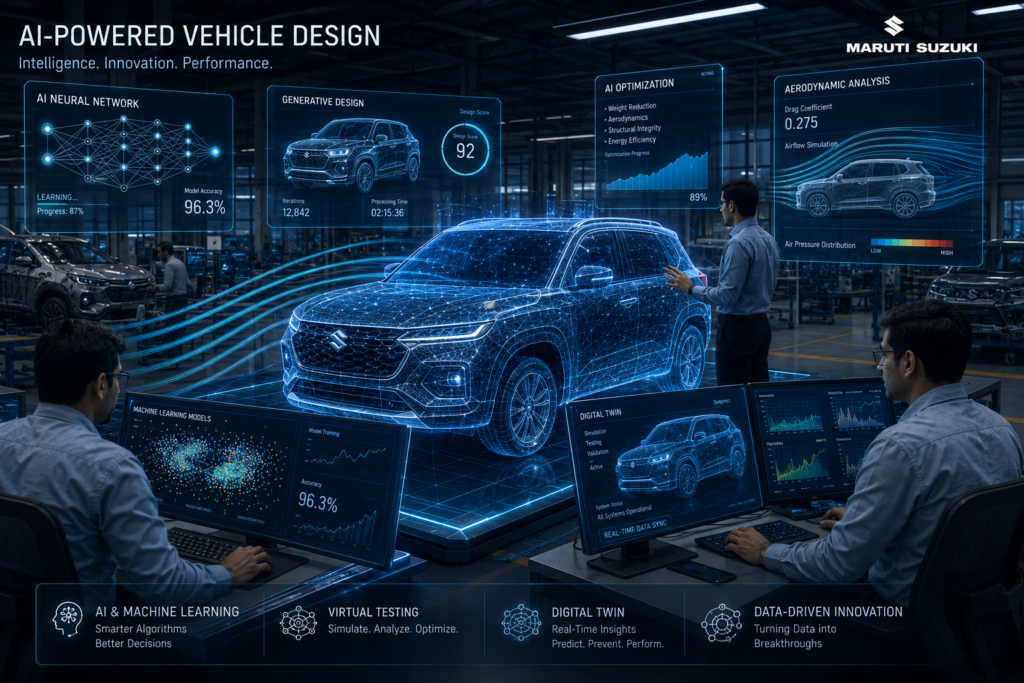
The traditional car development process is slow because it relies heavily on physical prototypes. Engineers design a car, build a physical model, test it, find issues, fix them, build another prototype, and test again. Each cycle takes weeks or months.
Maruti Suzuki is shifting toward virtual validation. Engineers will use digital simulations to test car designs before building any physical parts. AI and machine learning tools will analyse data from these simulations, identify potential problems early, and suggest fixes in the digital stage itself.
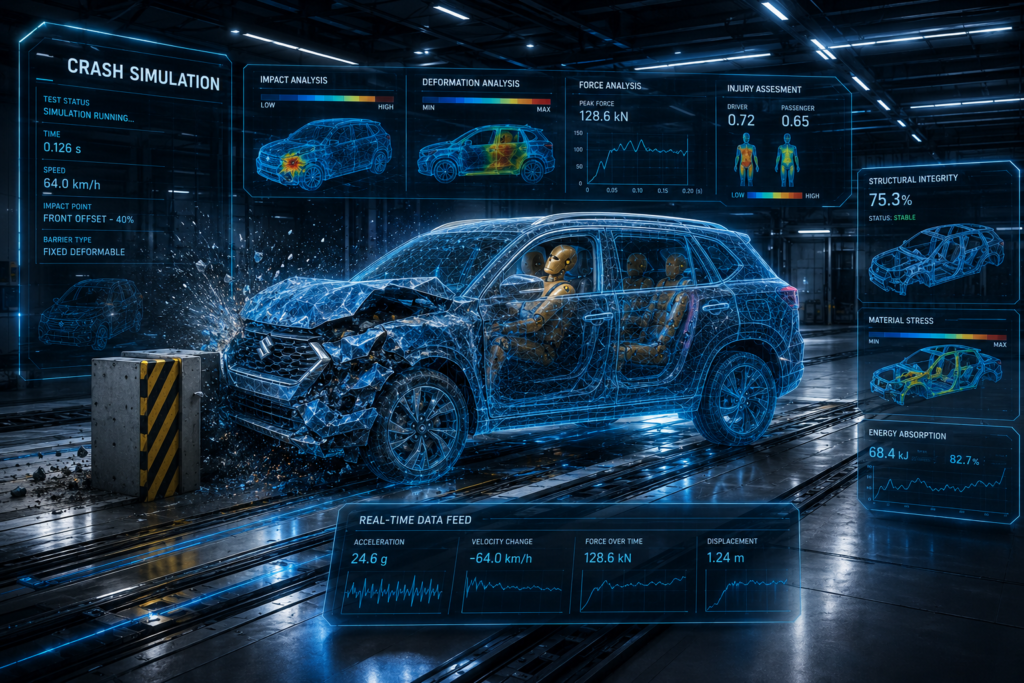
This means fewer physical prototypes, fewer rounds of testing, and fewer surprise issues late in development. The car reaches the prototype stage in a much more refined state, cutting months off the overall timeline.
2. Concurrent Engineering with Suppliers
In the old model, car development happened in a straight line. First the car was designed. Then suppliers were told to design components. Then tooling was set up. Then manufacturing preparation started. Each step waited for the last one to finish.
Maruti Suzuki is changing this to concurrent engineering. That means supplier activities like component design, tooling, validation, and manufacturing preparation will run in parallel with the main vehicle development. Not one after another. All at the same time.
This catches compatibility issues and design errors much earlier, when they are cheap to fix. It also means that by the time the vehicle design is finalized, the supply chain is already prepared for production instead of just getting started.
3. Higher Localisation from Day One
Maruti Suzuki is targeting more than 80 percent localisation at the start of production for future models. Localisation means manufacturing parts and components within India instead of importing them.
Why does this matter for speed? Because imported parts depend on international shipping, customs clearance, and overseas supply chains. Any disruption (like what happened globally during COVID) can delay production by weeks or months.
Higher localisation gives Maruti Suzuki three advantages: lower costs (no import duties or shipping fees), faster response times when something needs to change during development, and better supply chain security when production needs to scale up quickly.
How Are Maruti Suzuki’s Recent Sales Numbers?
The numbers show that demand for Maruti Suzuki vehicles remains strong. In May 2026, the company recorded its highest ever monthly sales at over 1.90 lakh units. Exports also crossed 42,000 units in the same month, registering a year on year growth of more than 34 percent.
If you look at the top 10 best selling cars in India for April 2026, Maruti Suzuki models dominate the list. The company also posted record numbers in April 2026 with 2.39 lakh units sold, with the Dzire alone outselling most SUVs in the country.
Utility vehicles now account for the majority of Maruti Suzuki’s passenger vehicle sales. Models like the Fronx (which recently became the first Nexa SUV to cross 5 lakh total sales) and the Victoris (which crossed 1 lakh sales in about eight months) show that the SUV strategy is already working.
The production target of 28.2 lakh units for FY2027 shows Maruti Suzuki is planning for continued high demand.
What Does This Mean for Car Buyers in India?
For Indian car buyers, Maruti Suzuki’s faster development cycle means more new models, more frequently. Instead of waiting four years between major launches, buyers can expect fresh products every three years or less.
It also means more choices in the SUV segment, which is where most buyers are already shopping. With seven new SUVs coming, there will be more competition across price points, which usually means better features and more aggressive pricing for buyers.
The focus on multiple powertrains is also good news. Whether you want petrol, CNG, hybrid, or electric, Maruti Suzuki is planning to have an option for you across its SUV range.
FAQ
How much faster will Maruti Suzuki develop new cars? Maruti Suzuki is targeting a 25 percent reduction in development time, going from 48 months to 36 months per vehicle.
How many new Maruti Suzuki cars are coming by 2028? Nine new models are planned, including seven SUVs and utility vehicles.
What technology is Maruti Suzuki using to speed up development? The company is increasing its use of AI, machine learning, simulation based testing, and virtual validation to reduce the number of physical prototype cycles needed.
Will Maruti Suzuki launch more electric vehicles? Yes. In addition to the e Vitara (already on sale), an electric MPV based on the same platform is reportedly under development.
What is concurrent engineering? It is a method where supplier work like component design, tooling, and manufacturing preparation happens at the same time as the main vehicle development, instead of one step after another.
What is Maruti Suzuki’s localisation target? More than 80 percent localisation at the start of production, meaning the majority of parts will be manufactured in India.