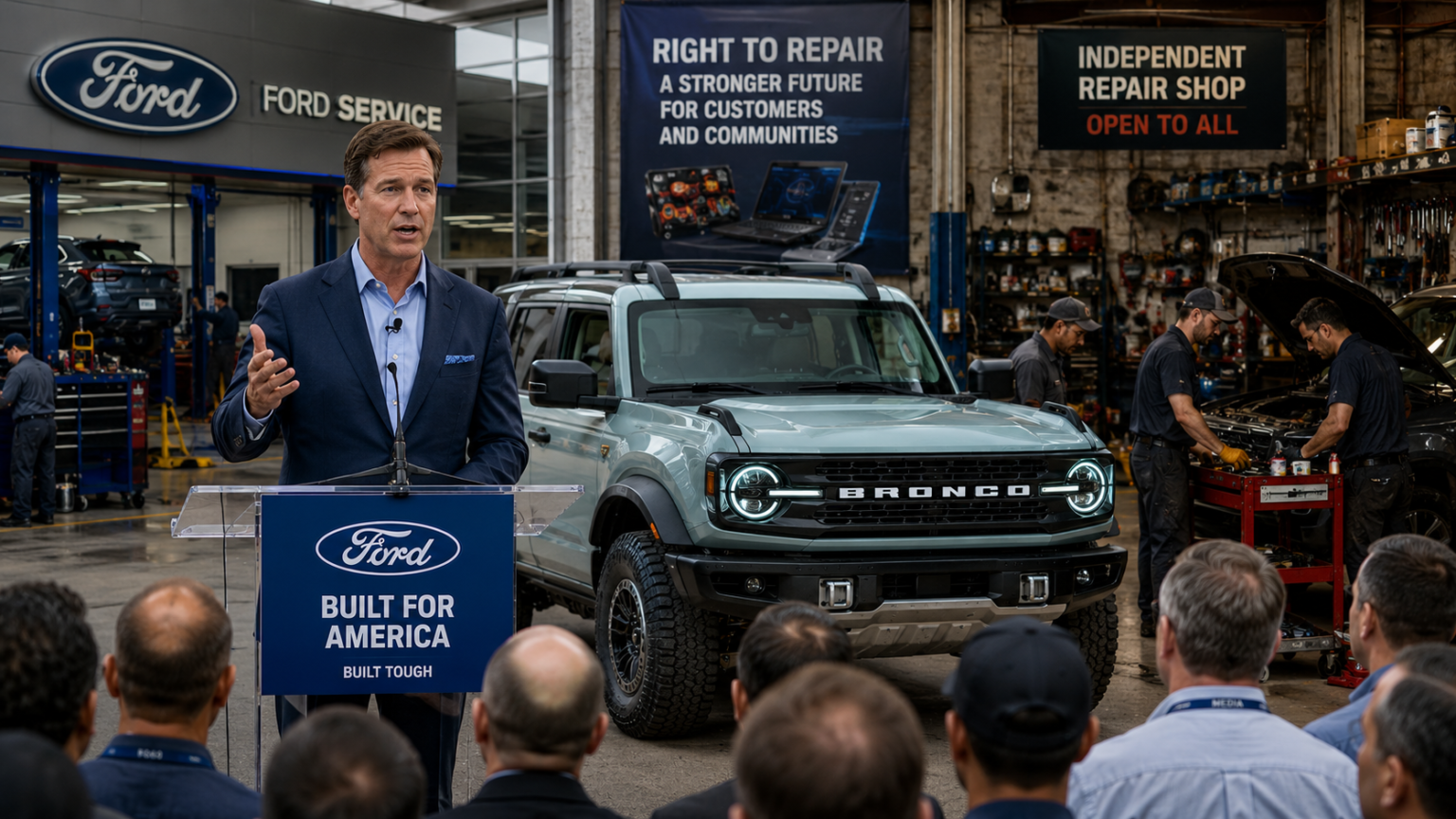

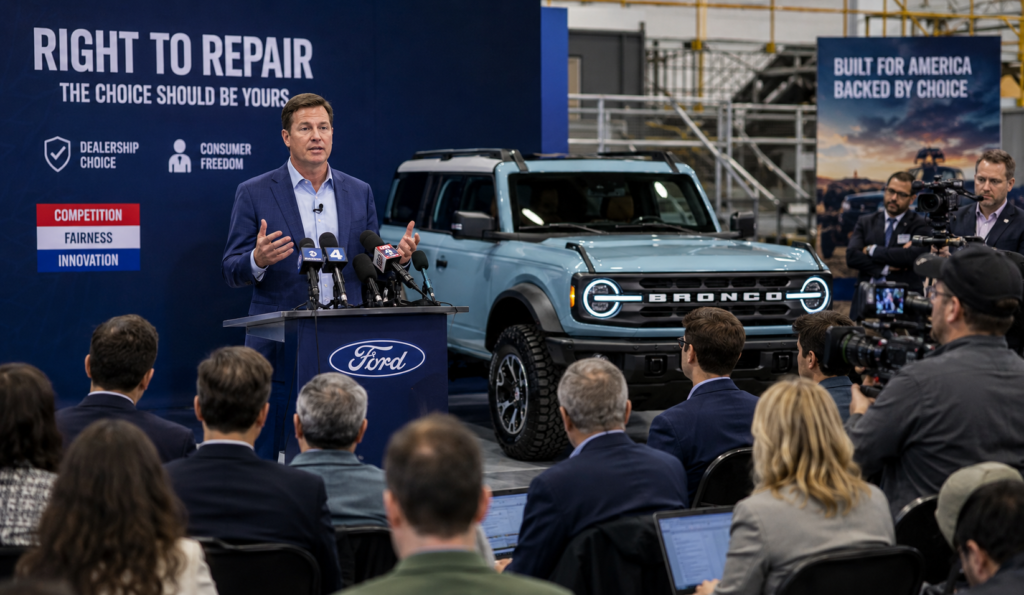
Ford CEO Jim Farley recently said that modern cars are too complex for people to repair at home. He made these comments after a White House meeting where President Trump discussed the “Right to Repair” issue with auto industry executives. Farley said Ford supports the ability to repair vehicles but added that warranty work should stay with dealerships because today’s cars need specialty tools and training.
These comments have sparked a massive backlash from car owners, independent mechanics, and repair rights advocates. Here is what Farley actually said, why people are upset, and what this debate means for Indian car owners.
What Did Jim Farley Actually Say?
On June 8, 2026, President Trump met with executives from Ford and General Motors at the White House to discuss Right to Repair. Trump told reporters that automakers “don’t want people to fix their car” and promised to “do something about that.”
Days later, the Detroit Free Press caught up with Farley at an event in Detroit. Here is a summary of what he said:
| What Farley Said | What It Means |
|---|---|
| “Ford’s position is very reasonable” | Ford believes its stance on repair is fair |
| “We’re a big advocate for the ability to repair a vehicle” | Ford claims to support repair rights in general |
| “It has to be done at a reasonable cost” | Vague statement without defining what “reasonable” means |
| “Not for warranty work, though” | Ford does not want anyone except Ford dealerships touching warranty repairs |
| “These are very complicated cars” | Used car complexity as the reason to limit DIY repair |
| “Someone at home like myself could never do it” | Farley said even he cannot repair a new Ford Bronco at home |
| “We would put people’s lives at risk” | Framed DIY repair as a safety issue |
The specific example Farley gave was the new Ford Bronco. He said he can work on a 1973 Bronco but not a brand new one because of the specialty tools required. Critics have pointed out that the new Bronco is actually one of the most mechanically simple new vehicles on sale today, being a ladder-frame truck with a gasoline engine. The argument that it is too complex for independent repair does not hold up well under scrutiny.
What Is Right to Repair and Why Does It Matter?
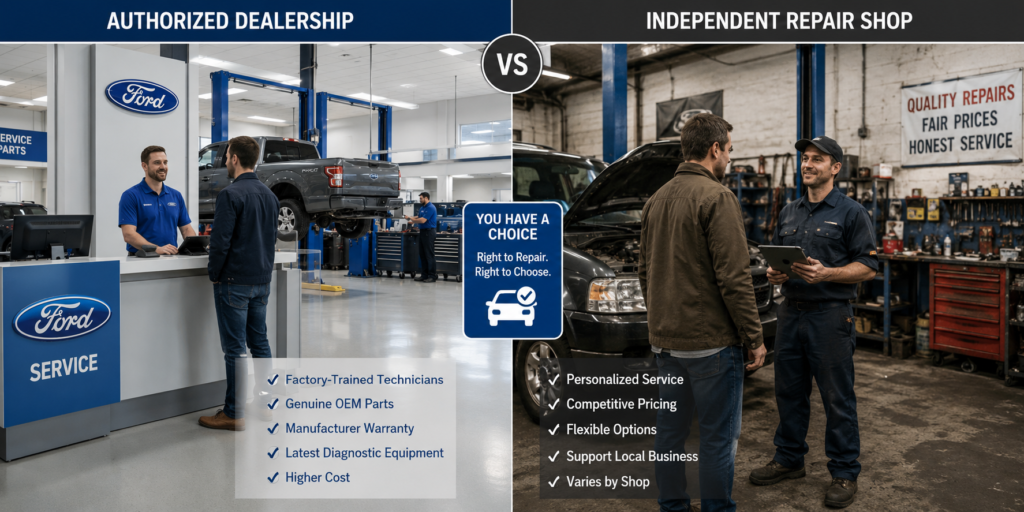
Right to Repair is a simple concept: if you buy a product, you should be allowed to fix it yourself or take it to any mechanic you choose. You should not be forced to go to the manufacturer’s own service center.
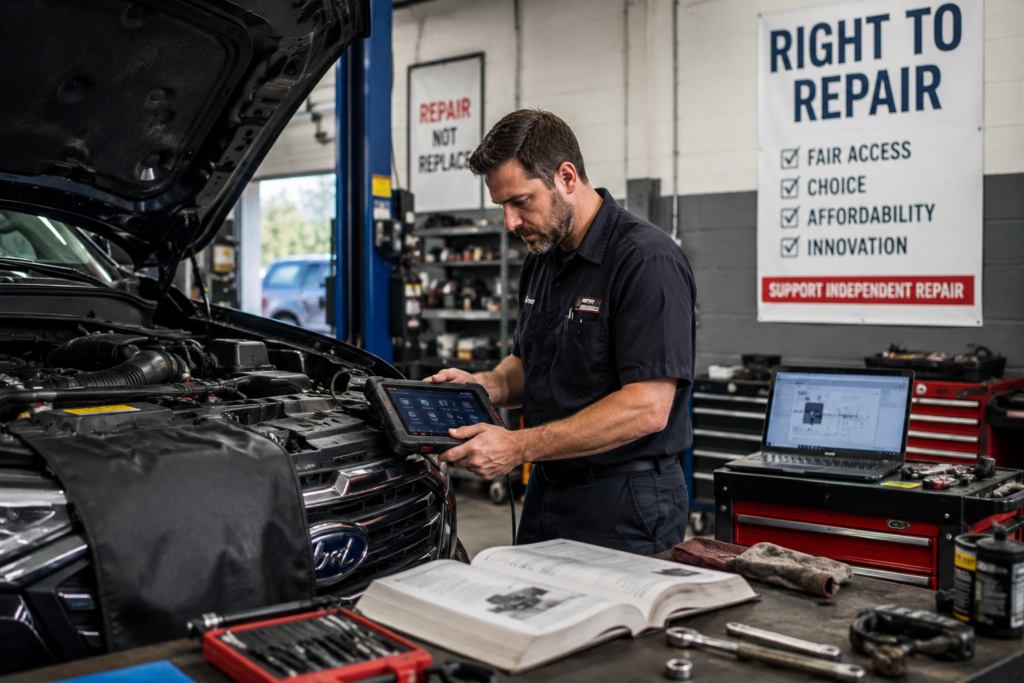
This matters because modern cars increasingly use encrypted software, proprietary diagnostic tools, and locked electronic systems. If automakers restrict access to these tools and data, independent mechanics cannot service these vehicles. That leaves only the dealership as your repair option.
Here is what happens when there is no repair competition:
| Scenario | Outcome for Car Owner |
|---|---|
| Multiple repair options (dealership + independent + DIY) | Competitive pricing, faster service, more convenience |
| Dealership-only repairs | Higher hourly rates, longer wait times, no price competition |
| Independent mechanics locked out | Thousands of small businesses shut down, fewer jobs |
The debate is not just about weekend hobbyists fixing cars in their driveways. It is about whether the entire independent repair industry, which employs millions of people worldwide, gets squeezed out of existence.
How Other Companies Responded
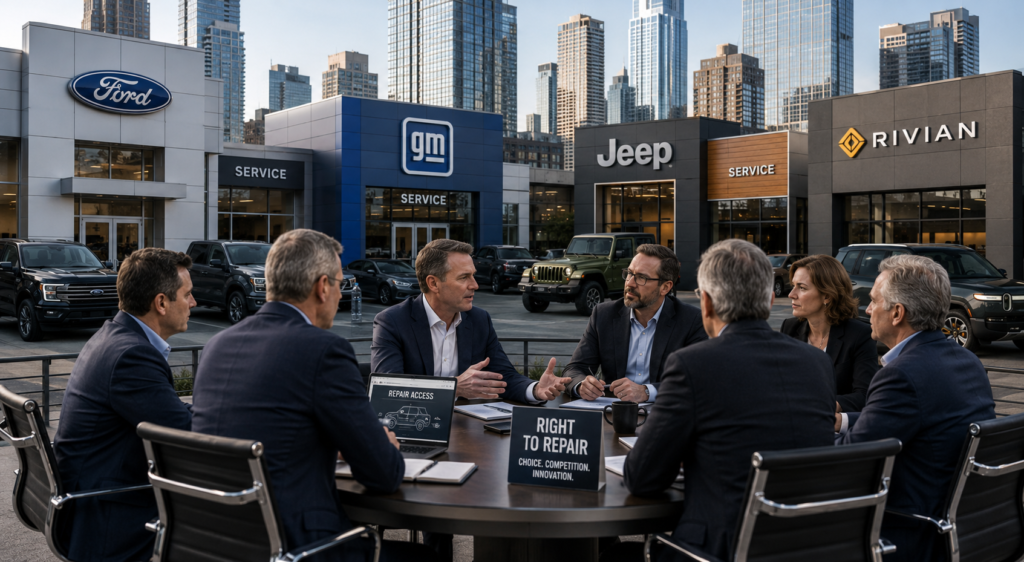
Ford was not the only company at the White House meeting. General Motors also attended, along with Roger Penske (the auto dealer magnate). Stellantis (parent company of Jeep, Chrysler, Dodge) was notably absent.
When The Drive asked Jeep for a comment, a Jeep spokesperson said: “Jeep vehicles are built, shaped, and continually reimagined by the people who own them. And that deep, authentic customization culture is what sets the Jeep brand apart.” More of a marketing statement than a policy position, but at least it acknowledged the importance of hands-on ownership.
Rivian’s CEO recently made headlines for a related issue. A Rivian R1T owner’s minor fender bender cost $42,000 to repair, and Rivian’s CEO RJ Scaringe publicly said “that should never happen.” That is the kind of repair cost nightmare that happens when manufacturers control the repair ecosystem too tightly.
What About India? Right to Repair Is Already Being Discussed Here
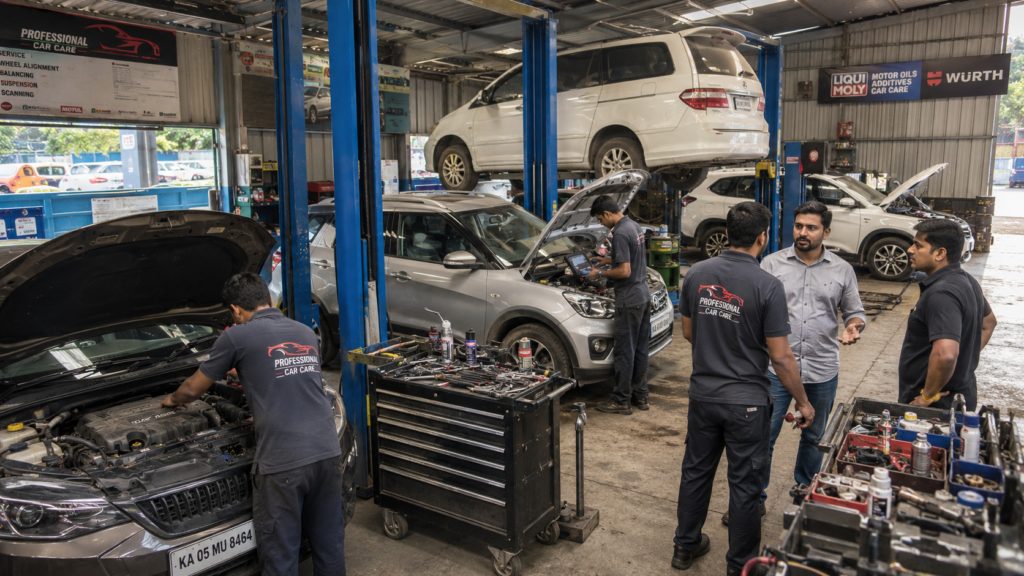
This is not just an American issue. India has its own Right to Repair movement, and it directly affects every car owner in the country.
In 2022, the Indian government set up the Nidhi Khare Committee under the Department of Consumer Affairs to develop a Right to Repair framework for India. The sectors identified include automobiles, mobile phones, consumer electronics, and farming equipment.
In 2024, the Department of Consumer Affairs launched the Right to Repair Portal India and held meetings with automobile associations including companies like Tata Motors and TVS to encourage them to join the portal and share repair information with consumers.
Here is where India stands compared to the US:
| Aspect | United States | India |
|---|---|---|
| Legislation status | No federal law yet, state-level bills exist | No statutory right yet, framework under development |
| Government action | Trump meeting with auto execs in June 2026 | Nidhi Khare Committee + Right to Repair Portal India |
| Key legal precedent | State-level Right to Repair laws (Massachusetts, etc.) | CCI ruling in Shamsher Kataria v Honda Siel (independent repairers must get access to spare parts) |
| Auto aftermarket size | $400+ billion | ~$10.1 billion (Rs 83,294 crore) |
| Independent repair culture | Strong but under threat from EV complexity | Very strong, especially in smaller towns and rural areas |
The CCI (Competition Commission of India) ruling in the Shamsher Kataria case is important. The CCI held that manufacturers restricting independent repairers from accessing spare parts through exclusive agreements was anti-competitive. This was a landmark ruling that supports the idea that car owners should have the freedom to choose where they get their vehicles serviced.
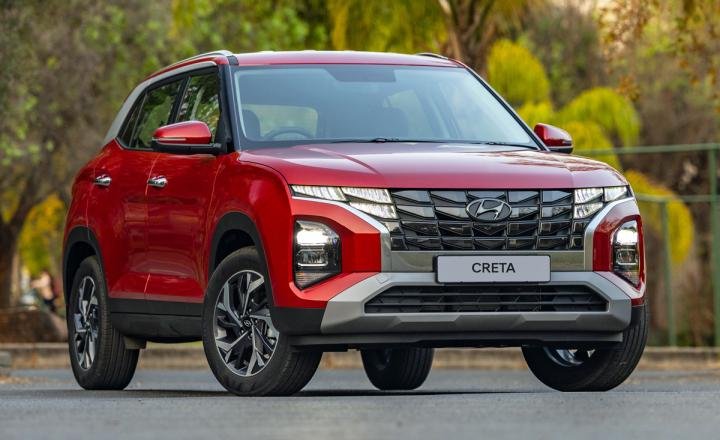
But the reality on the ground is different. If you buy a new Hyundai Creta or Tata Nexon today and get it serviced at a local garage instead of the authorized service center, you risk voiding your warranty. Most Indian car buyers do not even know they have options beyond the dealership for the first few years of ownership.
India’s informal repair sector is massive and plays a critical role in the economy. If manufacturers follow the same path Ford’s CEO is hinting at, locking down vehicle software and diagnostics, local mechanics across India could lose access to the tools they need to service newer vehicles. For a country where the nearest authorized service center might be hours away, that is a serious problem.
For perspective on how large and competitive the Indian auto market is, look at the best selling cars in India for April 2026. Millions of these vehicles end up at independent workshops. Any restrictions on repair access would affect a huge number of people.
The EV Factor: Why This Gets Worse With Electric Cars
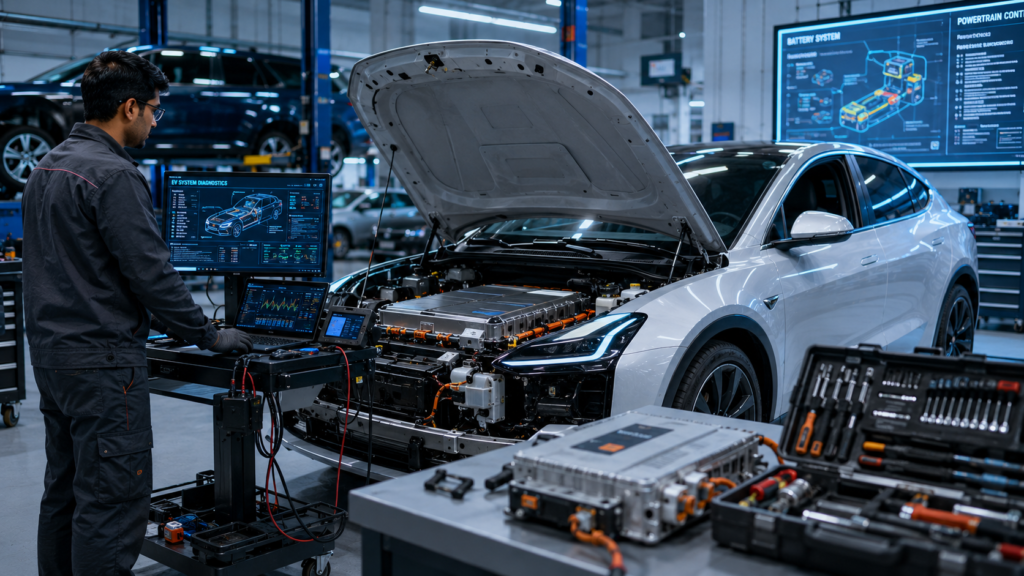
Jim Farley’s comments become even more concerning when you look at where the industry is heading. Electric vehicles are far more software-dependent than petrol or diesel cars. The battery management system, motor controllers, and over-the-air update systems are all controlled by proprietary software.
If automakers can argue that a gasoline Bronco is too complex for independent repair, imagine what they will say about a fully electric vehicle with 50+ electronic control units and software-defined features.
This is already happening. Tesla has faced repeated criticism for making it extremely difficult for independent shops to access parts, diagnostic tools, and repair manuals. Some Tesla repairs that should cost a few hundred dollars end up costing thousands because the only option is a Tesla-certified service center.
As India moves toward electric mobility, understanding how hybrid and electric powertrains work becomes important for both consumers and mechanics. The more complex the powertrain, the more leverage manufacturers have to lock out independent repair.
What Can Car Owners Do?
Whether you are in the US or India, here are practical steps:
Support Right to Repair legislation. In India, push for the Right to Repair framework to become a mandatory law, not just a voluntary portal. In the US, support state and federal Right to Repair bills.
Choose brands that support repair access. Some manufacturers are more open than others. Before buying your next car, check whether the brand makes repair manuals, parts, and diagnostic tools available to independent shops.
Get informed about your warranty rights. In India, the CCI has ruled that getting your car serviced at an independent workshop should not automatically void your warranty. Know your rights before the dealership tells you otherwise.
Keep records of all maintenance. Whether you go to a dealership or an independent mechanic, keep detailed records. This protects you in warranty disputes.
FAQ
What did Ford CEO Jim Farley say about car repairs? Farley said Ford supports the ability to repair vehicles but believes warranty work should be done at dealerships because modern cars are too complex and require specialty tools. He said DIY repairs on new vehicles could put people’s lives at risk.
What is Right to Repair? Right to Repair is the concept that consumers should be allowed to fix the products they own, either themselves or through any mechanic of their choice, without being forced to use only the manufacturer’s service centers.
Why are people upset about Farley’s comments? Critics say Farley’s argument about complexity is an excuse to lock out independent mechanics and force all repairs through Ford dealerships, where labor rates are higher and there is no competition. The example he used (the Ford Bronco) is actually one of the mechanically simpler new vehicles on sale.
Does India have Right to Repair laws for cars? Not yet as a statutory right. The Indian government set up the Nidhi Khare Committee in 2022 and launched the Right to Repair Portal India in 2024. The CCI has also ruled against manufacturers who restrict independent repairers from accessing spare parts.
Can I get my new car serviced at a local mechanic in India without voiding the warranty? The CCI’s ruling in Shamsher Kataria v Honda Siel supports the idea that manufacturers cannot restrict independent repair access through anti-competitive agreements. However, in practice, many dealerships still warn customers about warranty voidance. Keep documentation of all service work done at independent workshops.
How does this affect electric vehicle owners? EVs are more software-dependent than petrol or diesel cars, giving manufacturers even more control over who can service them. If Right to Repair protections are not put in place, independent EV repair could become nearly impossible.
Did Trump support Right to Repair? Yes. In June 2026, Trump met with Ford and GM executives to discuss the issue and said he would “do something about” manufacturers restricting car owners from fixing their own vehicles.
What did Jeep say about Right to Repair? Jeep (under Stellantis) was not at the White House meeting. When asked for comment, a spokesperson acknowledged the importance of hands-on ownership culture but did not take a strong policy position.